A ten-area skill rubric
Explore descriptive levels for time awareness, task initiation, working memory, planning, flexibility, emotional regulation, self-monitoring, impulse control, organization, and attention.
KEYSTONE'S EXECUTIVE FUNCTION FRAMEWORK
Notice patterns. Build practical supports.
Track meaningful progress.
When you know what needs doing but getting started or following through feels difficult, a smaller, clearer next step can help you explore what works for you.
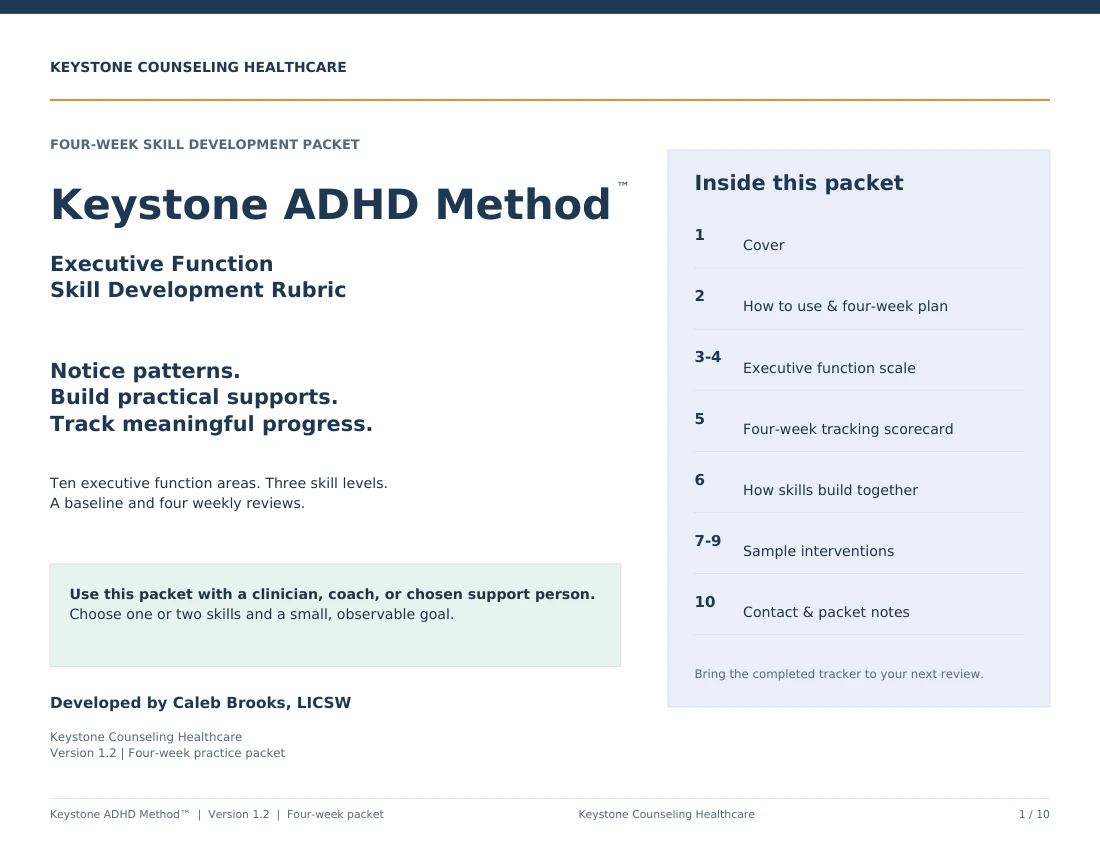
Developed by Caleb Brooks, LICSW, Keystone ADHD Method™ provides a framework for discussing ten executive function areas, choosing supports, and reviewing real-life examples over four weeks.
PDF · Version 1.2 · Four-week skill development packet
YOUR DOWNLOADABLE STARTING POINT
A practical resource to use with your clinician, coach, or chosen support person. Choose one or two skills and a small, observable goal.
Explore descriptive levels for time awareness, task initiation, working memory, planning, flexibility, emotional regulation, self-monitoring, impulse control, organization, and attention.
Choose an experiment: a first-step cue, checklist, visible timer, planned break, or a different way to organize a routine.
Record a starting point and four weekly check-ins. Note real examples, the tools that helped, and one adjustment for next time.
Use your tracker to discuss what feels easier, where you feel stuck, and which supports are worth keeping.
The packet supports skill discussion and tracking. It is not a stand-alone diagnostic test, and four weeks is a review window rather than a promised treatment timeline.
SUPPORT THAT FITS YOUR NEEDS
Practical skills and emotional wellbeing often belong in the same conversation. The right service depends on your goals and the support you need.
Focus on everyday skills, systems, routines, and accountability. Work on planning your week, starting tasks, managing time, organizing materials, and following through on goals.
A possible starting goal: create a repeatable routine for beginning one important task.
Explore emotional and behavioral patterns that affect daily life, including anxiety, avoidance, frustration, self-criticism, and the impact of ADHD. A clinician can help connect practical supports with your treatment goals.
A possible starting goal: understand the feelings and patterns that make a task harder to approach.
The practice will confirm service fit, clinician availability, fees, and any insurance questions before scheduling.
START WITH ONE SKILL
Download the packet, choose a routine, and bring your observations to your next conversation.
Questions? support@keystonecounselingcare.com